
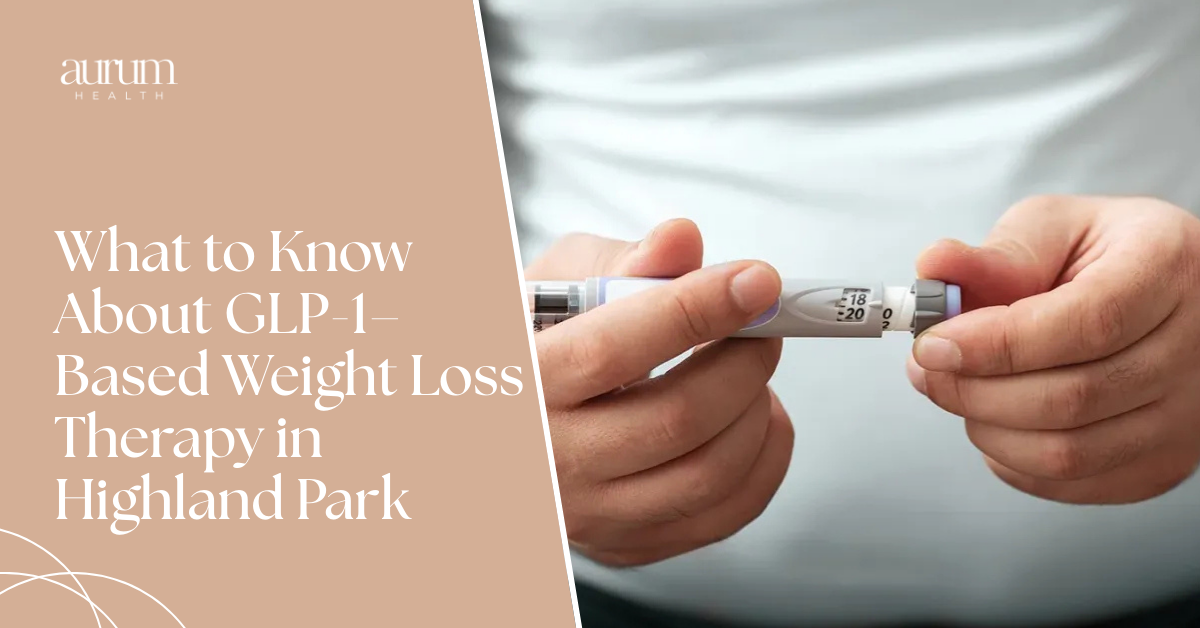
Understanding GLP-1–Based Weight Loss Therapy
Weight management is influenced by multiple factors, including metabolism, hormonal function, appetite signaling, and lifestyle habits. For many adults in Highland Park, achieving lasting results through diet and exercise alone can be challenging. GLP-1–based weight loss therapy is a physician-supervised, clinical approach designed to address these factors in a safe and structured manner.
This therapy is part of a comprehensive, evidence-informed program that integrates metabolic and hormonal support with personalized lifestyle guidance. By addressing the physiological drivers of weight, patients can participate in a GLP-1 medical program that prioritizes safety and long-term outcomes.
Why Physician Supervision Is Essential
Medical oversight is central to the safe and effective application of GLP-1 therapy. At Aurum Health, the physician-supervised GLP-1 program ensures:
- Personalization: Each treatment plan is tailored to the patient’s metabolic profile, health history, and goals
- Safety: Regular monitoring minimizes risk and ensures adjustments are made when necessary
- Integration: Therapy works alongside nutrition, exercise, and behavioral interventions
Clinical supervision ensures that therapy supports appetite signaling optimization and metabolic hormone function without relying on shortcuts or unregulated treatments.

How GLP-1 Medical Weight Loss Works
GLP-1 therapies are designed to mimic naturally occurring hormones that help regulate appetite and metabolism. In a clinical setting, the therapy focuses on metabolic hormone therapy and appetite regulation therapy to support patient progress.
Key mechanisms include:
| Mechanism | Clinical Function | Patient Benefit |
| Appetite signaling optimization | Enhances satiety and fullness cues | Supports portion control and reduces cravings |
| Metabolic hormone therapy | Modulates insulin and metabolic hormone activity | Stabilizes energy and supports healthy metabolic function |
| Dual-hormone weight loss therapy | Combines complementary hormonal pathways | Enhances metabolic efficiency and clinical adherence |
These mechanisms allow the therapy to complement lifestyle modifications, creating a holistic approach to weight management.
Components of a Clinical GLP-1 Program
A GLP-1 medical program is more than a prescription. It includes multiple coordinated elements delivered under clinical supervision:
1. Initial Assessment
- Comprehensive review of medical history, prior weight loss attempts, and metabolic markers
- Evaluation of lifestyle, nutrition, activity, and stress factors
- Identification of underlying contributors to appetite and metabolic imbalance
2. Personalized Therapy Plan
- Selection of clinical interventions appropriate for the patient
- Integration of hormone-based appetite therapy, dual-hormone support, or metabolic optimization therapy
- Structured plan combining therapy with lifestyle recommendations
3. Clinical Weight Management
- Regular check-ins and monitoring of metabolic markers
- Adjustments to therapy based on progress and patient response
- Support for behavioral adherence and appetite regulation
4. Lifestyle Integration
- Nutrition guidance emphasizing whole foods and balanced macronutrients
- Personalized physical activity recommendations
- Sleep optimization and stress management
5. Ongoing Monitoring
- Continuous clinical supervision ensures therapy remains safe and effective
- Timely adjustments for optimal metabolic support
| Program Component | Description | Benefit |
| Appetite regulation therapy | Supports fullness cues and reduces overeating | Improved adherence and portion control |
| Metabolic hormone therapy | Optimizes insulin and metabolic hormone balance | Stabilized energy and metabolic efficiency |
| Dual-hormone weight loss therapy | Combines hormonal pathways | Enhanced overall clinical outcome |
| Lifestyle guidance | Nutrition, exercise, sleep, stress | Supports sustainable metabolic improvements |
| Clinical monitoring | Regular evaluation and adjustment | Ensures safety and personalized care |

Who Can Benefit From GLP-1–Based Therapy
While not all patients are candidates, individuals most suited for this therapy typically:
- Have experienced challenges with conventional weight loss strategies
- Seek a physician-supervised GLP-1 program to ensure safe and guided intervention
- Are committed to integrating lifestyle modifications alongside clinical therapy
- Require metabolic or appetite-focused support for weight management
Eligibility is determined through a thorough clinical evaluation to ensure therapy is appropriate for individual’s health needs.
What to Expect in a GLP-1 Program
A structured GLP-1 program emphasizes gradual, monitored changes. Typical stages include:
| Week | Focus | Expected Adjustments |
| 1–2 | Initial adaptation | Adjustment to therapy and monitoring appetite cues |
| 3–4 | Hormonal support | Begin observing regulated satiety and metabolic stability |
| 5–8 | Therapy integration | Clinical adjustments for improved appetite signaling and dual-hormone balance |
| 9–12 | Monitoring & behavior | Tracking changes and supporting lifestyle adherence |
| 13+ | Long-term maintenance | Continued supervision and reinforcement of habits |
Clinical oversight ensures that therapy is adjusted to patient progress and safety, providing an individualized pathway to effective metabolic management.
Integrating Lifestyle and Clinical Therapy
Long-term success depends on combining GLP-1 medical weight loss therapy with lifestyle strategies:
- Nutrition: Focus on balanced meals with whole foods, fiber, and protein
- Physical activity: Moderate, consistent activity tailored to patient capacity
- Sleep and recovery: Support metabolic function and energy balance
- Stress management: Reduce emotional eating and improve adherence
By integrating lifestyle guidance with metabolic optimization therapy and appetite regulation support, patients develop sustainable habits that complement clinical interventions.
Potential Effects and Considerations
Patients may notice:
- Gradual improvements in appetite control
- Enhanced metabolic stability
- Better adherence to nutrition and lifestyle guidance
Some temporary adjustments, such as mild appetite changes, may occur. Ongoing supervision ensures these are monitored and managed appropriately.
Conclusion
GLP-1–based weight loss therapy in Highland Park offers a structured, physician-supervised, evidence-informed approach to weight and metabolic health. By combining GLP-1 medical weight loss, dual-hormone weight loss therapy, and appetite signaling optimization within a comprehensive clinical program, patients receive safe, individualized care designed for long-term success.
All treatments are provided under medical supervision and tailored to patient-specific needs. Learn more about a GLP-1 medical program designed to support your metabolic health at Aurum Health.
Frequently Asked Questions
Q1: How does GLP-1–based weight loss therapy work physiologically?
A: It supports appetite signaling optimization and metabolic hormone balance under clinical supervision.
Q2: Can I participate if previous diets have failed?
A: Yes, therapy addresses underlying metabolic and appetite factors that often limit self-directed weight loss.
Q3: Is lifestyle modification required?
A: Yes, therapy is integrated with nutrition, activity, sleep, and stress support.
Q4: How often are patients monitored?
A: Regular follow-ups ensure therapy is adjusted for safety and efficacy.
Q5: Who is not a candidate?
A: Individuals with contraindicated conditions or unwillingness to follow supervised guidance.
Q6: Can therapy be combined with other clinical interventions?
A: Yes, it is integrated within a broader clinical program for metabolic health.
Q7: What changes should I expect?
A: Gradual improvements in appetite control, energy stability, and adherence to clinical guidance.
Q8: How long does therapy last?
A: Duration is personalized based on patient needs and metabolic response.