
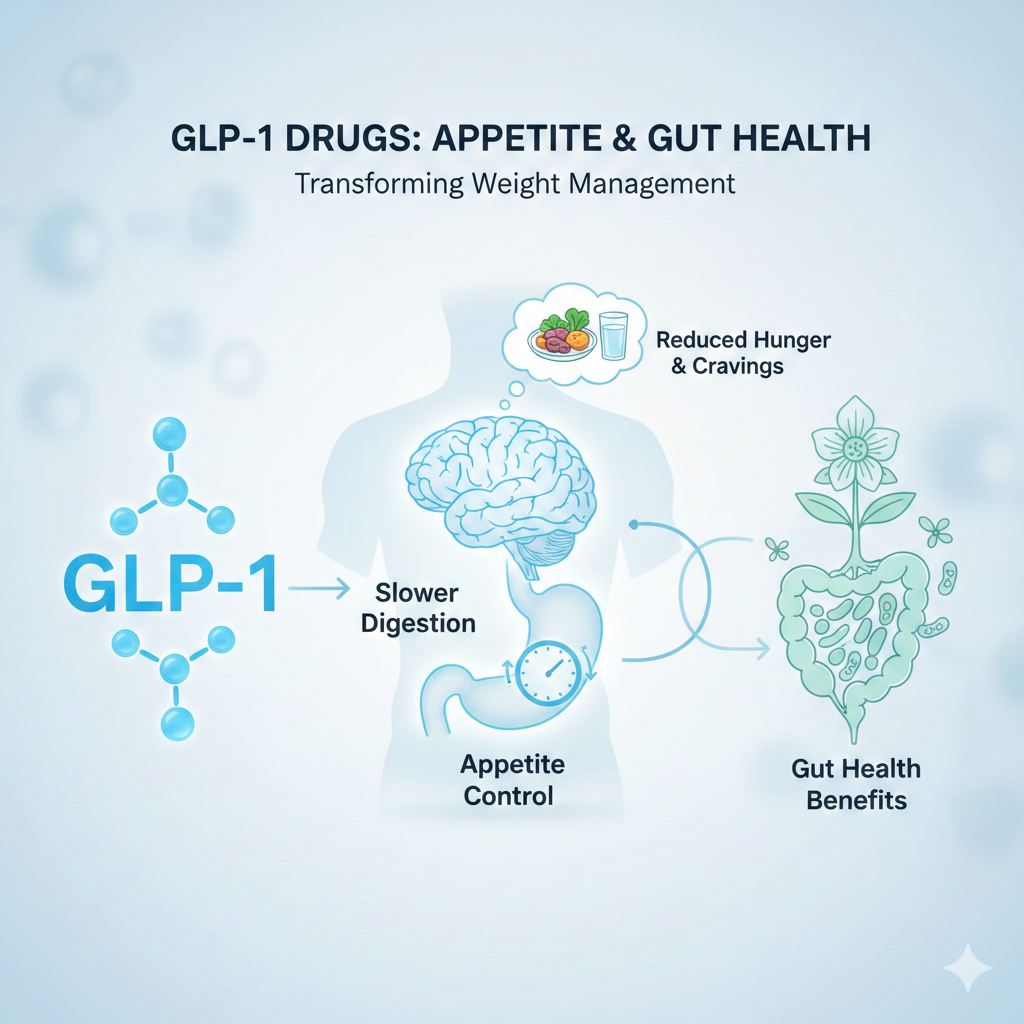
If you’ve heard about GLP-1 drugs for weight loss, you’re not alone. These medications are changing the way many people manage their weight. But they don’t just help you shed pounds. They also affect how your body perceives hunger and how your gut functions.
In this article, we’ll tell you how these drugs work. We’ll also talk about how they change both appetite and digestion. Understanding this can help you decide if they’re right for you.
What Are GLP-1 Drugs?
GLP-1 drugs for weight loss are a type of medication that mimics a natural hormone in your body. GLP-1 stands for Glucagon-Like Peptide-1. After you eat, this hormone is secreted in your stomach. It tells your brain that you’re full. It also helps regulate your blood sugar.
The original purpose of these drugs was to treat type 2 diabetes. However, they have become popular for weight management. That’s because they help reduce food intake without making you feel deprived.
How GLP-1 Medications Work
When you eat, your stomach sends signals to your brain. GLP-1 helps make those signals stronger. This means you feel full faster. As a result, you eat less.
GLP-1 weight loss medications cut down the rate at which your stomach empties. Because of that, food stays longer in your stomach. This also helps reduce hunger.
Additionally, GLP-1 affects parts of the brain involved in reward. That means you might not crave high-fat or high-sugar foods as much as before.
Appetite Control Through Hormones
The body’s hunger system is complex. It involves many hormones and brain signals. GLP-1 is just one part, but it’s a powerful one.
When GLP-1 is increased through medication, hunger cues become weaker. Many people feel satisfied with smaller meals. Some users report that they forget to eat. While not everyone experiences this, it is typical.
GLP-1 drugs for weight loss can reduce emotional eating. That means you might snack less when you’re bored or stressed. With less food intake, the body starts using stored fat for energy.
Effects on Gut Health
Your gut isn’t just for digestion. It plays a role in mood, immunity, and overall wellness. So, any change to gut function matters.
GLP-1 weight loss medications alter the way your stomach functions. Since they slow digestion, you may notice less frequent bowel movements at first. This doesn’t mean your gut is unhealthy. It’s just adjusting.
Also, slower digestion allows more time for your body to absorb nutrients. That can be good if your diet is balanced. However, if you’re not eating well, you might not feel your best.
Furthermore, GLP-1 medications may reduce gut inflammation in some people. That’s still being studied, but early results are promising.
Common Side Effects and What to Expect
Like any medication, GLP-1 drugs for weight loss can have side effects. The most common ones involve the stomach. You may feel:
- Nausea
- Bloating
- Constipation
- Heartburn
These symptoms are usually mild and go away with time. Your doctor may suggest starting with a low dose and increasing it slowly. That often helps the body adjust.
It’s also important to eat slowly and avoid fatty meals. Doing this can reduce discomfort. Side effects might be severe in certain situations. Always talk to your doctor if you feel worse over time.
Why Some People Lose More Weight Than Others
Results vary from person to person. Some people lose 5% of their body weight. Others may lose over 15%. Several factors can affect this:
- Your starting weight
- Your eating habits
- How active you are
- Genetics
GLP-1 drugs for weight loss work best when combined with healthy habits. That includes regular meals, balanced nutrition, and light physical activity.
Moreover, sleep plays a role. Individuals who get enough sleep typically lose more weight than those who don’t. That’s because sleep affects hunger hormones too.
Mental and Emotional Changes
Food affects the brain, and so do GLP-1 medications. Users often report feeling less obsessed with food. This can reduce anxiety around eating.
Cravings for sugar or salty snacks also drop in many people. While these mental changes can be positive, they can also feel strange. Some people feel like food no longer brings joy. That might take time to adjust to.
If this happens, it helps to focus on non-food joys. Enjoy a walk, music, or a hobby. With time, your relationship with food can become more balanced.
Long-Term Effects on the Gut
Because these medications slow digestion, the gut changes over time. Most of the time, this is harmless. But it does mean your stomach might not work the same as before.
GLP-1 drugs for weight loss could also change your gut bacteria. This is still being studied. Some researchers believe the change could be good. It might lead to better metabolism and stronger immunity.
Still, it’s wise to eat fiber-rich foods. Fiber supports gut health and helps with regular bowel movements. Drinking water often also helps.
When Should You Consider These Drugs?
Not everyone needs medication to lose weight. But for people who have tried other methods, GLP-1 drugs for weight loss can be a strong option.
You might consider them if:
- You have obesity or are overweight
- You struggle with constant hunger
- You’ve tried diets without success
- You have type 2 diabetes or prediabetes
Always talk to a healthcare provider before starting. These medications require monitoring. Some people may not be good candidates, especially those with certain stomach conditions.
Lifestyle Still Matters
It’s easy to think the drug will do all the work. But it doesn’t replace healthy choices. You still need to move your body and eat smart.
GLP-1 drugs for weight loss make it easier to follow a healthy routine. But they are not magic. People who change their habits while on the medication get the best results.
Also, remember that this isn’t a quick fix. Most people stay on the drug for months or even years. That’s why it’s important to build habits that will last.
What Doctors Are Saying
Healthcare providers are paying close attention. Many agree that GLP-1 drugs for weight loss are the biggest step forward in years.
Doctors see improvements not only in weight but also in blood sugar, blood pressure, and even sleep quality. Some patients even reduce or stop other medications.
Still, they also warn against relying on the drug alone. Support from dietitians, therapists, and exercise coaches can boost your success.
Conclusion
GLP-1 drugs for weight loss are more than just a weight-loss tool. They affect how your body perceives hunger and how your gut functions. Many people feel fuller with less food, experience fewer cravings, and see steady weight loss over time.
Still, they are not a one-step solution. Success comes from combining medication with healthy habits, good sleep, and support from health professionals. While side effects may happen, most people adjust well with the right guidance. Schedule a consultation at Aurum Health today to speak with one of our experts.
FAQs
Q1: How long do I need to take GLP-1 drugs for weight loss?
A: It depends on your individual health goals, progress, and how your body responds to treatment. Many people take GLP-1 drugs for several months or even years to maintain weight loss. Your doctor may adjust your dosage or recommend stopping based on your results. Always follow your healthcare provider’s guidance to ensure safety and effectiveness.
Q2: Do GLP-1 drugs affect gut bacteria?
A: Yes, they might. These medications influence digestion and gut activity, which can affect the balance of bacteria in your digestive tract. Some early research suggests that changes in gut bacteria could support weight management and metabolic health. However, this area is still being studied, and results may vary from person to person.
Q3: Can I stop taking GLP-1 drugs after reaching my goal weight?
A: Possibly, but you should only stop under medical supervision. Some people regain weight after stopping, especially if lifestyle habits haven’t changed. Your doctor may suggest tapering off slowly or continuing a low dose for maintenance. The key is to maintain healthy eating and activity habits for lasting results.
Q4: Are GLP-1 drugs safe for people with diabetes and obesity?
A: Yes, they are commonly prescribed for both conditions. GLP-1 drugs can help lower blood sugar, reduce appetite, and support weight loss. However, they may not be suitable for everyone. It’s important to review your full medical history with your doctor before starting treatment. Regular monitoring helps track progress and avoid side effects.
Q5: What side effects can GLP-1 drugs cause?
A: Some people experience mild side effects like nausea, bloating, or diarrhea when starting treatment. These often improve as your body adjusts. In rare cases, there may be more serious issues like gallbladder problems or pancreatitis. If you notice severe symptoms, contact your doctor right away. Starting with a low dose can help reduce side effects.