
Hands-on clinical injectable programs offer the direct, supervised experience necessary to master facial anatomy and injection depth. While online-only courses provide theory, they lack the tactile feedback and real-time correction found in supervised aesthetic programs. For practitioners in Preston Hollow and beyond, physician-guided aesthetics training ensures safety and superior results. Choosing a clinical injectable therapy path provides the professional non-surgical care expertise needed to deliver safe, effective, and beautiful patient outcomes consistently.
Introduction
Clinical injectable programs are the gold standard for anyone serious about entering the world of aesthetics. We have spent years watching the industry evolve, and one thing remains true: you cannot learn the “feel” of human skin through a laptop screen. Whether you are looking to master dermal filler programs or simple neurotoxins, the transition from theory to practice is a massive leap.
In affluent areas like Preston Hollow, patients expect nothing less than perfection. They are looking for clinical facial enhancement that looks natural and refined. As a provider, your reputation is your most valuable asset. That is why we believe that the only way to truly learn is through supervised injectable treatments. In this guide, we will dive deep into why getting your hands dirty (metaphorically speaking) in a clinical setting is the only way to go.
The Digital Divide: Why Screens Aren’t Enough
We live in a world where you can learn almost anything on YouTube. From fixing a sink to coding an app, the internet is a treasure trove of info. However, clinical injectable programs fall into a different category. This is medical art. It is about depth, resistance, and the subtle variations in human anatomy.
When you take an online-only course, you miss out on the most critical part of learning: tactile feedback. I remember the first time I held a syringe in a professional setting. The way the needle passes through the epidermis versus the dermis is a sensation you just can’t download. Online courses often skip the nuances of supervised facial therapy, leaving new injectors feeling lost when they finally face a real patient.
The Power of Physician-Guided Aesthetics
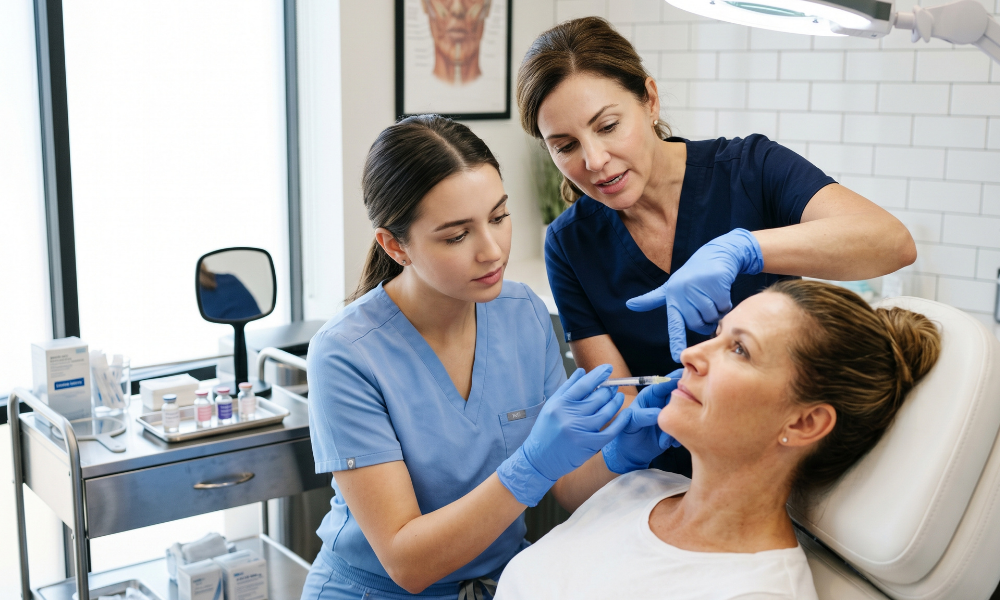
One of the biggest perks of a hands-on clinical injectable program is access to experts. Having physician-guided aesthetics training means you have a mentor standing right next to you. They can see if your angle is slightly off. They can tell if you are applying too much pressure.
This kind of supervised aesthetic program is what builds confidence. According to the American Society of Plastic Surgeons, patient safety should always be the top priority in any non-surgical procedure. You simply cannot guarantee that safety if you have never been corrected by a pro in real life.
At Aurum Health, we emphasize that the human touch is irreplaceable. We believe that professional non-surgical care starts with a deep understanding of the patient’s unique facial structure.
Why Preston Hollow Demands Clinical Aesthetic Injections
If you are practicing in a high-end market like Preston Hollow, your clients are well-educated. They know what good work looks like. They aren’t just looking for a quick fix; they want a clinical aesthetic injections expert who understands the long-term impact of facial rejuvenation care.
Clinical injectable therapy isn’t just about filling a wrinkle. It is about understanding how the face moves. When you participate in a physical clinical injectable program, you get to see how different faces react to treatment in real-time. You learn how to manage expectations and how to create a plan that spans months or years.
Supervised Injectable Treatments: The Safety Net
Let’s talk about the elephant in the room: complications. No one likes to talk about it, but things can go wrong. Vascular occlusions or even simple bruising can happen to the best of us. In a supervised injectable treatment environment, you learn how to spot these issues immediately.
Online courses might have a module on “complication management,” but watching a video is not the same as having an instructor show you exactly how to aspirate or how to use hyaluronidase in an emergency. This is why we advocate for safe and effective ways to rejuvenate your face.
Mastering Dermal Filler Programs in Person
Many students ask us, “Can’t I just practice on a mannequin?” While mannequins are great for getting your grip right, they don’t bleed, they don’t flinch, and they don’t have feelings. Dermal filler programs require an understanding of volume and shadows that only a live model can provide.
When you are in a live clinical injectable program, you see how the skin lifts. You see how the light hits the cheekbones after a treatment. This is the essence of clinical facial enhancement. It is a blend of science and art that requires a human connection.
The Importance of a Supervised Aesthetic Program
Beyond the needle, there is the consultation. A huge part of any non-surgical care program is talking to the patient. In a supervised aesthetic program, you get to watch how seasoned pros handle difficult questions.
You learn the vocabulary of beauty. You learn how to suggest injectable treatments without making the patient feel self-conscious. This “soft skill” set is rarely taught effectively in online modules.
Clinical Injectable Therapy: Building Your Portfolio
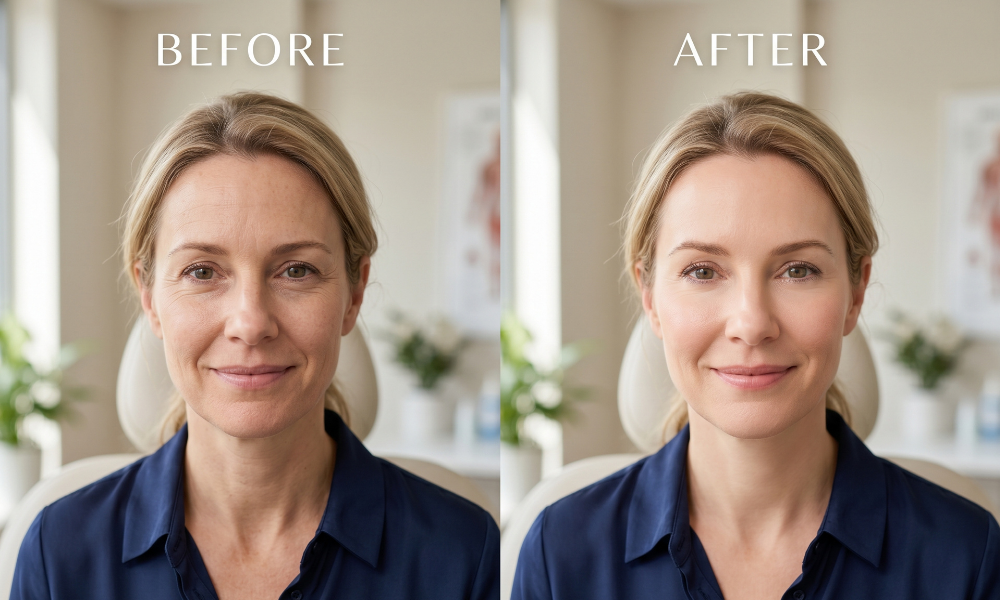
When you finish a hands-on clinical injectable program, you leave with more than just a certificate. You leave with the memory of successful treatments. You might even have photos of your work (with consent, of course) to start your portfolio.
Prospective employers and clients want to know you’ve done the work. They want to see that you have undergone rigorous, physician-guided aesthetics training. It gives them peace of mind knowing you aren’t just a “laptop injector.”
Real-World Examples of the Clinical Difference
I once met an injector who had only done online training. They were brilliant at the theory. They could name every muscle in the face. But when it came to a real-life supervised facial therapy session, they froze. They didn’t know how to handle a patient who had a slight asymmetry.
A clinical setting teaches you that no face is perfectly symmetrical. You learn to adapt. This adaptability is what separates the amateurs from the professionals in facial rejuvenation care.
The Future of Professional Non-Surgical Care
As the industry grows, the regulations will likely get tighter. We are already seeing a shift toward requiring more documented clinical hours. By choosing clinical injectable programs now, you are future-proofing your career. You are setting a standard for professional non-surgical care that will stand the test of time.
According to The Journal of Clinical and Aesthetic Dermatology, the demand for minimally invasive procedures is skyrocketing. To meet this demand, we need injectors who are not just fast but exceptionally skilled and safe.
Final Insights
At the end of the day, your journey in aesthetics is a personal one. But if you want to be the best, you have to learn from the best in person. Clinical injectable programs provide the foundation, the safety, and the artistry that online courses simply cannot match. Whether you are focusing on dermal filler programs or a broader non-surgical care program, remember that your hands are your most important tools. Give them the training they deserve. If you are ready to take your skills to the next level and provide the best care in Preston Hollow, we invite you to explore what is possible with a hands-on approach.
Ready to elevate your practice? Visit Aurum Health to learn more about our commitment to excellence in aesthetics.
Frequently Asked Questions
1. Can’t I just learn the theory online and practice on my own?
While online courses are great for learning the science and basic concepts, they can’t teach you the “feel” of human skin. Mastering injection depth and navigating the resistance of different tissue layers requires tactile feedback that a screen simply cannot provide. Hands-on training ensures you aren’t just guessing when you finally treat a patient.
2. Why is real-time correction so important in aesthetics training?
In a clinical setting, an expert instructor can see exactly how you are holding a syringe and the angle at which you are entering the skin. They can provide immediate, live corrections to your technique. This prevents the development of bad habits and ensures that you are delivering treatments safely and effectively from the very start.
3. Is physician-guided training really necessary for experienced practitioners?
Absolutely. The aesthetics field is constantly evolving with new products and techniques. Physician-guided programs offer a level of clinical oversight that ensures you are meeting the highest medical standards. This guidance is crucial for mastering complex facial anatomy and minimizing the risk of complications, regardless of your experience level.
4. Will a hands-on program help me achieve better results for my patients?
Yes. Clinical programs focus on the nuances of facial symmetry and injection precision. By practicing under supervision, you learn how to customize treatments to a patient’s unique anatomy. This leads to more natural-looking, beautiful results and, ultimately, higher patient satisfaction and retention.
5. How do clinical programs prepare me for the “real world” of aesthetic medicine?
Beyond just the injections, clinical programs place you in a professional environment, like those found in Preston Hollow, where you learn the standards of non-surgical care. You get a feel for the patient interaction, the prep work, and the post-care protocols that are vital for a successful career in a high-end clinic.
6. What is the biggest risk of choosing an online-only injectable course?
The primary risk is a lack of safety. Without supervised, hands-on experience, it is much easier to misjudge injection depth or placement, which can lead to poor results or medical complications. Clinical training provides the safety net you need to gain confidence before working independently.