
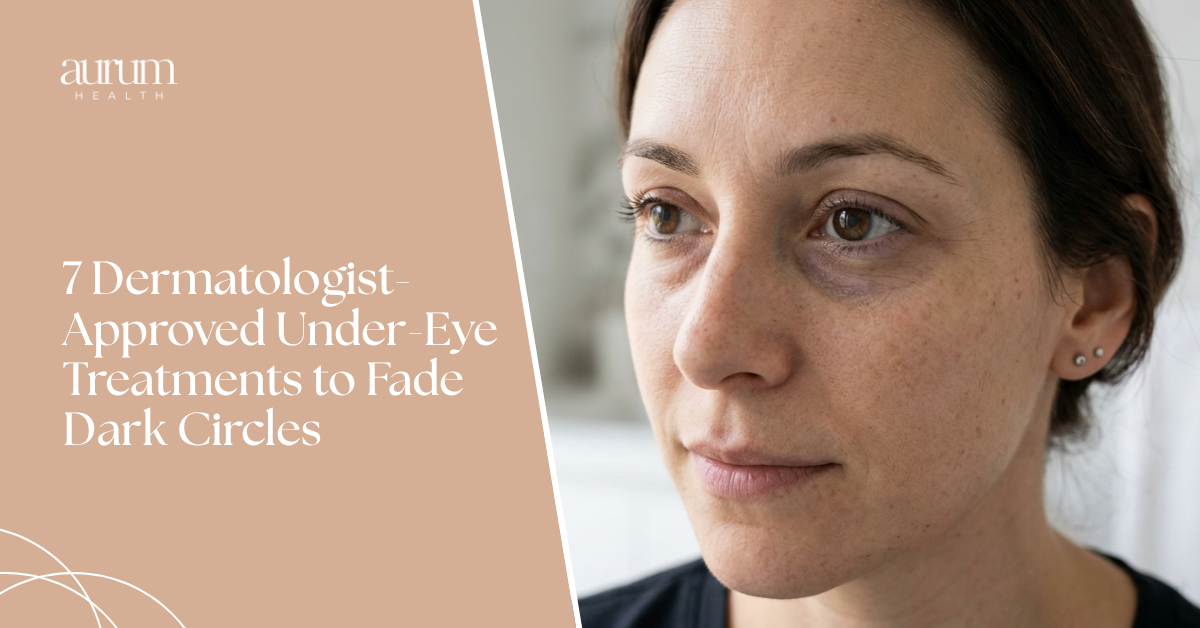
The best under-eye treatment options focus on brightening skin and restoring lost volume. Dermatologists often recommend topical ingredients like Vitamin C and retinol for daily care. For deeper concerns, professional clinical under-eye therapy such as hyaluronic acid fillers, chemical peels, or laser resurfacing provides more dramatic results. Whether you need non-invasive eye rejuvenation or a physician-supervised aesthetic care plan, addressing the root cause, like thinning skin or pigmentation, is key to a refreshed, youthful appearance.
Introduction: Why Your Under-Eyes Need Extra Love
We have all been there. You wake up, look in the mirror, and see those stubborn dark shadows staring back at you. Even after a full eight hours of sleep, you still look tired. We know how frustrating that can be. In University Park, where life moves fast, your eyes are often the first place to show stress, aging, or environmental wear.
An under-eye treatment isn’t just about vanity. It’s about feeling like yourself again. The skin around our eyes is thinner than a sheet of paper. It lacks the oil glands that the rest of our face has, making it prone to dryness and fine lines. If you are searching for clinical eye area therapy that actually works, you are in the right place.
In this guide, we will walk you through seven professional ways to brighten those shadows. From medical eye care programs to simple lifestyle shifts, we will cover everything you need to know about supervised eye rejuvenation.
1. Topical Vitamin C and Retinol: The Daily Essentials
If you want a non-invasive eye rejuvenation routine at home, start with the basics. Dermatologists love Vitamin C because it is a powerful antioxidant. It helps block the enzyme that produces pigment in the skin. This means it can actually lighten those brown spots over time.
Retinol is the other heavy hitter. It speeds up cell turnover and helps your body make more collagen. When you use a supervised wrinkle support cream with retinol, you are thickening that thin skin. Thick skin hides the blue blood vessels underneath, which are often the real cause of dark circles.
Why it works for University Park residents:
Our local climate can be harsh on the skin. Using a physician-supervised aesthetic care product ensures you aren’t using something too strong that could cause peeling or redness.
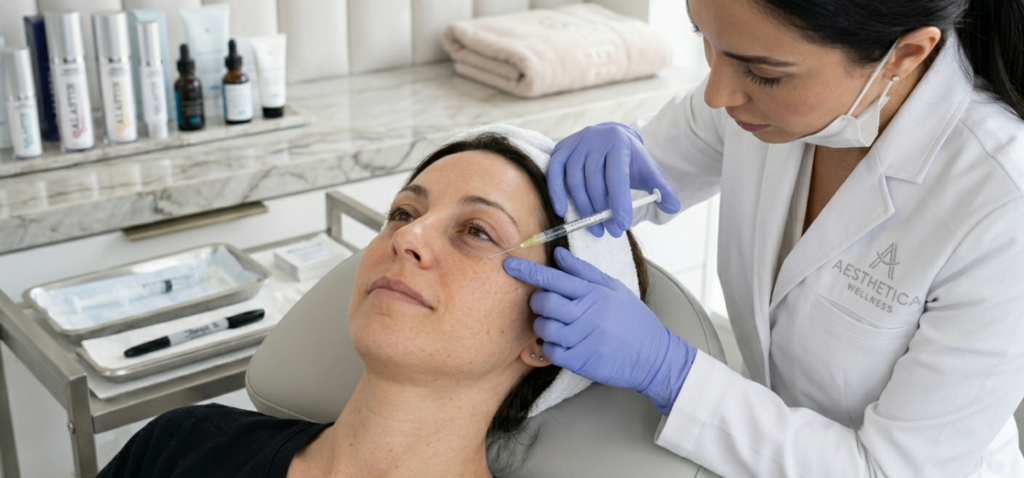
2. Dermal Fillers for Hollow Eyes
Sometimes, dark circles aren’t about the color of your skin. They are about the shadow. As we age, we lose fat under our eyes. This creates a “tear trough”—a hollow dip that catches the light and creates a dark shadow.
An under-eye treatment using hyaluronic acid fillers can fix this instantly. This is a form of clinical under-eye therapy where a professional adds a tiny amount of gel to smooth out the transition between your cheek and your eye.
According to the American Academy of Dermatology, fillers are one of the most common ways to treat volume loss in the face. The results are immediate, and you can walk out of the office looking years younger.
3. Chemical Peels: Clinical Eye Area Therapy
You might think chemical peels are only for the forehead or cheeks, but they are great for the eyes, too. A professional aesthetic eye care program often includes light glycolic or TCA peels.
These peels gently remove the top layer of dead skin. This reveals brighter, more evenly toned skin underneath. It is especially helpful if your dark circles are caused by hyperpigmentation from sun damage or friction.
4. Laser Therapy for Pigment and Veins
Lasers are a game-changer for under-eye treatment. Some lasers target the brown pigment (melanin), while others target the blue and red veins under the skin.
This type of clinical wrinkle reduction also heats the deeper layers of the skin. This heat tells your body to “wake up” and start producing new collagen. It’s like a workout for your skin cells. If you want a non-invasive eye rejuvenation that lasts, lasers are a top choice.
5. Microneedling with Platelet-Rich Plasma (PRP)
Have you heard of the “Vampire Facial”? For the eyes, we call it PRP therapy. A provider takes a small sample of your blood, spins it to get the growth factors, and then injects it back into the skin around your eyes.
This is a major part of a modern aesthetic wellness program. It uses your body’s own healing power to thicken the skin and improve texture. It is a fantastic medical eye care program option for those who want natural results without synthetic fillers.
6. Cold Compresses and Medical-Grade Caffeine
Sometimes the problem is just puffiness. When fluid builds up, it creates bags that cast shadows. A clinical under-eye therapy doesn’t always have to involve a needle.
Caffeine-infused eye serums act like a cup of coffee for your skin. They constrict the blood vessels and reduce swelling. Pairing this with a cold compress in the morning can provide supervised under-eye treatments that you can manage easily at home.
7. Physician-Supervised Aesthetic Care Programs
The most important thing is a plan. You shouldn’t just buy every cream on the shelf. A medical eye care program tailored to your skin type is the best way to see real change.
At Aurum Health, we focus on supervised eye rejuvenation that looks natural. We don’t want you to look like you’ve “had work done. “We want you to look like you’ve had the best sleep of your life. Our aesthetic wellness program focuses on your diet, skincare, and clinical treatments to help you achieve the best results in University Park.
Understanding the Roots of Dark Circles
To pick the right under-eye treatment, we have to know why the circles are there. There are usually three main reasons:
| Cause of Dark Circles | How It Looks | Best Treatments to Try |
| Pigmentation-Based Dark Circles | Brownish or uneven skin tone that becomes darker with sun exposure | Chemical peels, Vitamin C serums, and Laser treatments |
| Thin Skin Under Eyes | Bluish or purple tint with visible veins showing through the skin | Retinol creams, PRP therapy, Microneedling |
| Hollow Under Eyes (Tear Troughs) | Sunken appearance with deep shadows often looks like a “trench.” | Dermal fillers, Fat transfer treatments |
By identifying your specific type, we can create a clinical wrinkle reduction plan that actually targets the problem instead of just covering it up with concealer.
Lifestyle Tips for Better Results
Even the best under-eye treatment won’t work if you aren’t taking care of yourself. Here are a few things we always tell our patients in University Park:
- Sleep on your back: This prevents fluid from pooling in your face.
- Watch the salt: Too much salt makes you hold water, which leads to puffy eyes.
- Wear Sunglasses: This is the easiest clinical eye-area therapy. UV rays break down collagen, making the skin thinner and darker.
- Stay Hydrated: Dehydrated skin looks dull and sunken.
What to Expect During a Clinical Eye Area Therapy Session
If you decide to go for a professional treatment, you might feel a bit nervous. Don’t be! Most non-invasive eye rejuvenation procedures are quick and painless.
For fillers, we use a numbing cream so you barely feel a pinch. For lasers, it might feel like a tiny rubber band snap. Most people are back to their normal routine in University Park the very same day.
According to the Mayo Clinic, most non-surgical cosmetic procedures have very little downtime, making them perfect for busy professionals.
Take the Next Step
You deserve to look as vibrant as you feel. Whether you choose a simple medical eye care program or a full aesthetic wellness program, taking that first step is what matters. Dark circles don’t have to be your trademark. With the right under-eye treatment, you can brighten your gaze and boost your confidence. If you are ready to see what professional, clinical eye care therapy can do for you, we are here to help. At Aurum Health, we specialize in physician-supervised aesthetic care that gets results. From supervised wrinkle reduction to advanced laser therapy, we have the tools to help you shine.
Visit Aurum Health today to schedule your consultation and start your journey to a brighter, refreshed you!
Frequently Asked Questions
1. Why do I still have dark circles even when I get a full eight hours of sleep?
It’s a common myth that fatigue is the only cause of dark circles. While lack of sleep can make skin appear paler (allowing blood vessels to show through), many dark circles are actually caused by genetics, thinning skin, or “hollowness” due to volume loss. If your shadows persist after a good night’s rest, they are likely linked to pigmentation or structural changes rather than just tiredness.
2. Which topical ingredients should I look for in an eye cream?
For daily at-home care, dermatologists highly recommend Vitamin C and retinol. Vitamin C acts as a powerful antioxidant that brightens the skin and fades pigmentation. Retinol, on the other hand, helps stimulate collagen production to thicken the delicate skin under the eyes, making underlying blood vessels less visible over time.
3. When is it time to move from over-the-counter creams to professional treatments?
If you’ve been using high-quality eye creams for 3–6 months with little to no improvement, it may be time to consult a professional. Topical treatments are excellent for surface-level pigment and hydration, but they cannot restore lost volume or fix deep structural shadows. Clinical therapies like fillers or lasers are better suited for these more “stubborn” concerns.
4. How do hyaluronic acid fillers help with under-eye shadows?
Many dark circles are actually “shadows” cast by a hollow space under the eye, often called a tear trough. By injecting a hyaluronic acid filler, a specialist can “fill” that depression, smoothing the transition between the cheek and the lower eyelid. This reflects light better and instantly reduces the appearance of the shadow.
5. Are chemical peels and lasers safe for the sensitive skin around the eyes?
Yes, when performed under physician-supervised aesthetic care. Modern chemical peels and laser resurfacing are specifically calibrated for the thin, sensitive skin in the orbital area. These treatments work by removing damaged top layers of skin and triggering the body’s natural healing process to reveal brighter, tighter, and more even-toned skin.
6. How long does it typically take to see results from under-eye rejuvenation?
It depends on the method. Clinical treatments like hyaluronic acid fillers offer near-instant results. However, non-invasive options like chemical peels, laser resurfacing, or topical retinol usually require a series of sessions or several weeks of consistent use to show a dramatic difference as the skin cells regenerate and collagen builds.