
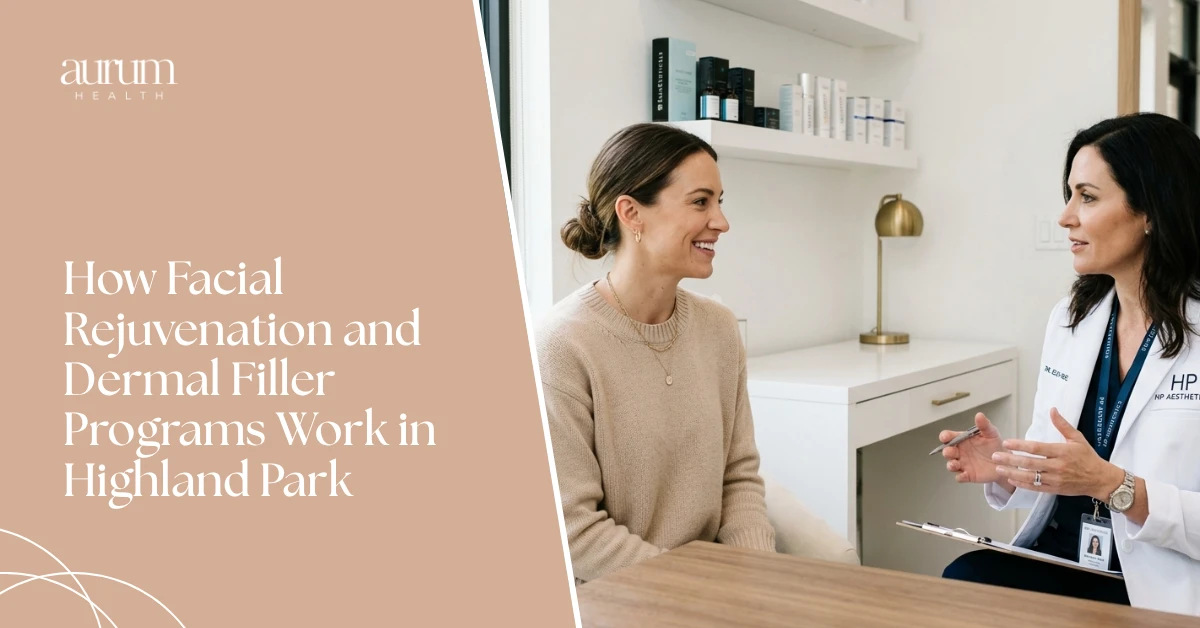
Dermal filler programs work in Highland Park for thousands of adults every year, yet most people still arrive at their first appointment with more questions than answers. You’ve seen the results on others. You’ve done the late-night research. But you’re still not sure what actually happens during treatment, who to trust, or whether the outcome will look natural on your face specifically. That uncertainty makes complete sense.
The fear of looking “overdone” is real, and the number of providers claiming expertise doesn’t make the decision easier. This guide breaks down the entire process, from your first clinical consultation to long-term maintenance, so you can walk in prepared, confident, and clear on exactly what to expect.

Why More Highland Park Residents Are Choosing Professional Facial Care
Highland Park sits in one of the most wellness-conscious communities in greater Dallas. People here aren’t looking for a dramatic transformation. They want to look like themselves, just a little more rested, refreshed, and alive. That expectation is quietly driving consistent growth in demand for supervised facial care that prioritizes subtlety over spectacle.
The motivation behind this shift isn’t purely cosmetic either. When volume loss, deepening lines, or hollowing under the eyes make someone look more tired than they actually feel, a well-administered aesthetic enhancement program becomes genuinely restorative. It doesn’t change a face. It gives back what time has slowly taken away.
What separates quality professional facial care from the rest is the structure behind it. When treatment begins with a proper clinical assessment, honest goal-setting, and real physician oversight, the results consistently land where patients hoped they would. That foundation is what makes the difference between a great experience and a disappointing one.
How Dermal Filler Programs Work in Highland Park, Step by Step
That growing demand for professional facial care makes much more sense once you understand what a well-run program actually involves. A physician-guided dermal filler program is far more intentional and personalized than most people realize. Knowing the steps removes most of the anxiety before you ever set foot in a clinic.

Starting with a Clinical Consultation
Before any treatment is discussed, the process begins with a thorough clinical consultation. A licensed provider reviews your skin health, medical history, and aesthetic goals in genuine depth. This isn’t a brief checklist conversation.
It’s a structured assessment of your facial anatomy, symmetry, volume patterns, skin laxity, and overall skin condition. The purpose is to build a treatment plan designed entirely around your face, not around a generic protocol. Many patients find that this consultation alone resolves most of their questions and significantly lowers their anxiety about what comes next.
Facial Mapping and Product Selection
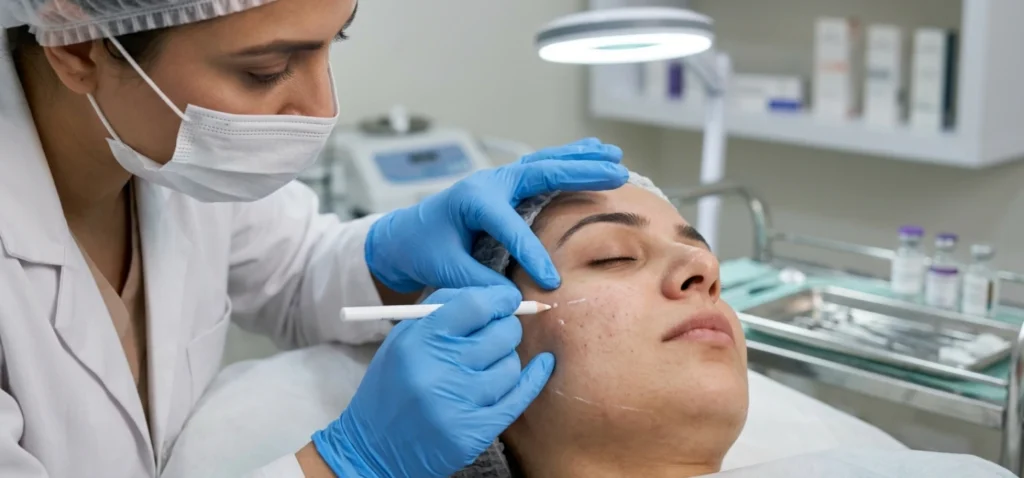
After the consultation, your provider carefully maps the face before a single needle is introduced. This step identifies precise injection points with blood vessel locations, tissue depth, and natural facial movement all factored in.
Simultaneously, the right filler type is selected for each treatment area. Thicker, more viscous products are used for structural zones like the cheeks and jawline. Softer formulas are matched to delicate areas like the lips and fine perioral lines. This deliberate matching process is exactly what separates clinical injectable therapy from rushed, template-based treatment.
What Happens During the Treatment Session Itself
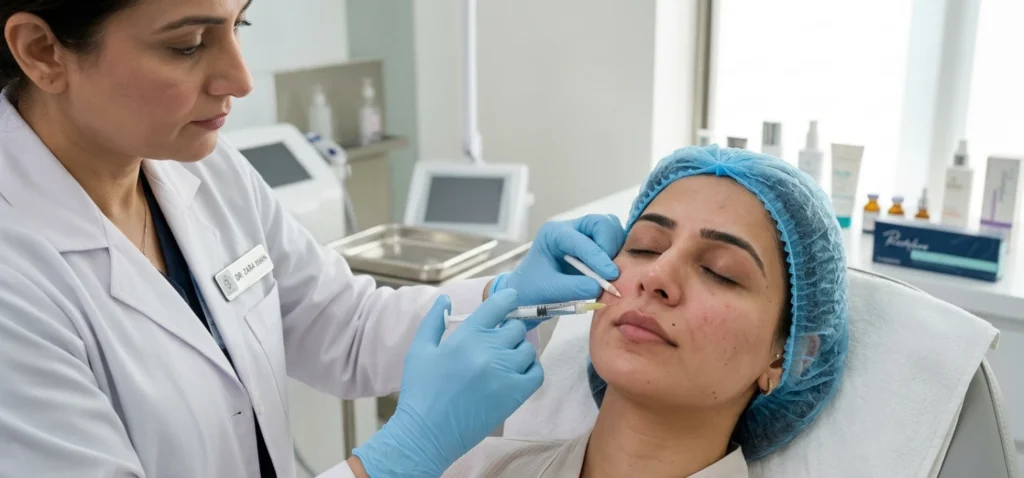
The actual session is often shorter than people expect. Most appointments run between 30 and 60 minutes, depending on the number of areas being treated. Modern hyaluronic acid fillers typically contain a built-in numbing agent, so discomfort stays minimal throughout.
Your provider works methodically through the mapped areas using fine needles or cannulas, depending on the site. Mild swelling and light bruising are completely normal and usually resolve within three to five days. Initial results are often visible right away, with full settling occurring over the following two to four weeks.
What a Complete Clinical Aesthetic Program Actually Includes
Now that the step-by-step process is clearer, it helps to zoom out and see the full picture. A properly structured clinical aesthetic program is much more than a single injection appointment. Here is what a complete supervised facial care program at a reputable clinic typically includes:
- Comprehensive Medical Intake: A full health history review screens for contraindications and confirms treatment is medically appropriate before anything else moves forward.
- Customized Treatment Mapping: A detailed facial assessment produces an individualized injection plan designed around your bone structure, skin quality, and specific aesthetic goals.
- Product Selection and Guidance: Your provider recommends the right filler type for each area based on clinical need, not on trends or inventory convenience.
- The Treatment Session: Delivered by a licensed, physician-supervised provider using sterile technique, medical-grade products, and the precision the face genuinely requires.
- Detailed Aftercare Instructions: Post-treatment guidance tells you exactly what is normal, how to reduce swelling, and what warrants a follow-up call to the clinic.
- Scheduled Follow-Up Review: A dedicated check-in appointment assesses your results, addresses concerns, and helps plan future maintenance as your skin continues to evolve.
Each of these components is part of what makes supervised facial care worth the investment. Together, they form the structure that keeps results safe, natural, and consistent over time.
The Role of Physician-Guided Care in Safe Facial Rejuvenation
That clinical structure only holds up when the right person is guiding it. Physician oversight isn’t an optional add-on or a marketing claim. It is the single most important factor in achieving a safe, natural-looking outcome from any dermal filler program. Understanding exactly why that matters helps you ask the right questions when evaluating providers.
Why Physician Oversight Changes Everything
The difference between a natural result and an overcorrected one almost always comes down to clinical expertise. Physician-guided injectable therapy means a licensed medical professional is either performing the procedure directly or actively supervising it in real time. They understand vascular anatomy at a level that non-medical providers don’t.
They can recognize and manage complications early. And they carry medical accountability in a way that unlicensed practitioners simply do not. In Texas, regulations around who can legally administer injectables exist for real clinical reasons. The face has no margin for error when things go wrong.
Matching the Right Filler to the Right Area
Not every filler product is appropriate for every part of the face. Using the wrong formula in the wrong location creates visible, unnatural-looking problems. Structural fillers are designed for the cheeks, chin, and jawline, where definition and support are the goal. Softer, more flexible products perform far better around the lips, tear troughs, and fine lines because those areas move constantly with expression.
A physician-guided dermal filler program matches product to anatomy with intention. This precise matching is exactly what produces results that look and move naturally, the kind that friends notice without being able to name.
After Your Treatment: What to Expect During Recovery
Most people are genuinely surprised by how manageable the recovery period is. Temporary swelling, mild tenderness, and light bruising are expected responses to the injection process. These effects typically clear within three to five days without any special intervention.
What matters most is having a care team that remains accessible after your appointment, so you know confidently what falls within the normal range and what doesn’t. Supervised injectable treatments at a credible clinic like Aurum Health always include this post-care access, because good care doesn’t end when you walk out the door.
Non-Surgical Facial Enhancement vs. Surgical Alternatives: An Honest Comparison
With a solid understanding of physician-guided care, one question still surfaces regularly among patients: Is non-surgical facial enhancement a truly comparable alternative to surgery? For many people in Highland Park, the honest answer is yes. Here is why the comparison consistently favors the non-surgical route for the right candidate:
- No General Anesthesia Required: Dermal filler treatments are performed in-office with topical numbing. There is no operating room, no sedation, and no surgical risk involved.
- Minimal Recovery Time: Most patients return to normal daily activity within 24 to 48 hours. Surgical facial procedures typically require several weeks of structured downtime.
- Reversible Results: Hyaluronic acid fillers can be dissolved with hyaluronidase if results aren’t what you hoped for. Surgical changes are permanent from day one.
- Lower Upfront Investment: A clinical injectable therapy program costs a fraction of surgical options like facelifts, fat grafting, or facial implants.
- Gradual and Adjustable Over Time: Filler can be added incrementally across multiple visits, allowing subtle, progressive change rather than one dramatic, obvious shift.
- Designed as an Ongoing Program: Supervised facial care evolves alongside your skin as you age, making it a continuous wellness investment rather than a one-time procedure.
How Long Dermal Filler Results Last and How to Protect Them
The comparison between surgical and non-surgical approaches naturally raises the question of longevity. How long does clinical facial rejuvenation actually hold? Understanding the realistic timeline helps you plan your aesthetic care the same way you would approach any meaningful long-term investment in your health.
Realistic Timelines for Your Dermal Filler Results
Most hyaluronic acid fillers last between six and eighteen months. The range depends on the area treated, the specific product used, and how quickly your body naturally metabolizes it. High-movement areas like the lips break down filler faster because the surrounding muscles are constantly active throughout the day.
More stable areas, including the cheeks, temples, and jawline, hold volume longer since movement in those zones is minimal. Your provider will give you a specific estimate during your consultation based on your individual anatomy and treatment plan, so you leave with realistic expectations rather than optimistic ones.
Scheduling Maintenance and Follow-Up Visits
Most patients enrolled in a physician-guided dermal filler program schedule maintenance visits every nine to twelve months. Some prefer more frequent touch-ups to maintain consistently full, fresh results. Others are comfortable allowing volume to naturally taper between appointments. Both approaches work well for the right person.
What truly matters is continuity of care. A provider who tracks your treatment history, knows exactly what was placed in previous sessions, and builds intentionally on past work will always deliver better long-term outcomes than starting completely fresh each visit.
Combining Fillers with Complementary Aesthetic Treatments
Dermal fillers perform strongly on their own. They become significantly more powerful when supported by complementary treatments. Many patients at Aurum Health combine their filler program with Botox and injectable neurotoxins to address dynamic, muscle-related lines in areas fillers alone don’t resolve. Others pair treatment with advanced skincare facials to improve overall texture and tone across the surface.
Adding IV therapy supports skin hydration from within, further extending the quality and longevity of results. This layered approach, a full aesthetic enhancement program, delivers comprehensive rejuvenation without placing the entire burden on a single treatment modality.
Who Gets the Best Results from an Aesthetic Enhancement Program
With a full picture of how the program works, the final question worth answering directly is whether this is the right path for you. These are the people who consistently see the best outcomes from supervised facial care in Highland Park:
- Adults with Early to Moderate Volume Loss: Fillers perform best when adequate skin elasticity still exists. Starting earlier typically means longer-lasting, more naturally distributed results across the face.
- People Seeking Subtle, Natural-Looking Enhancement: Candidates focused on looking refreshed rather than dramatically different consistently report the highest satisfaction with their outcomes.
- Those in Good General Health: Because this is a medical procedure, a proper intake assessment screens for any conditions that could affect treatment safety or the quality of results.
- Individuals with Realistic Expectations: The best outcomes come from trusting your provider’s clinical judgment rather than trying to replicate someone else’s specific results on your own.
- Anyone Frustrated by Topical Skincare Alone: If creams and serums aren’t addressing volume loss or deeper lines, a clinical injectable therapy program may finally deliver the change you’ve been looking for.
- People Ready to Think Long-Term: Those who approach aesthetic care as an ongoing program rather than a one-time fix consistently achieve far better results over months and years.
Final Thoughts
Understanding how dermal filler programs work in Highland Park is the first real step toward feeling genuinely confident about the process. When treatment is clinically structured, physician-guided, and built around your specific goals and anatomy, the results are subtle, natural, and built to last. That is what separates a truly exceptional experience from an average one, and it starts with choosing the right clinical partner from the beginning.
Book a personalized consultation with Aurum Health in Dallas and take the first step toward refreshed, natural-looking results today.
Frequently Asked Questions
What makes dermal filler programs work in Highland Park differently from standard injection appointments?
A structured clinical program includes a full consultation, physician-supervised facial mapping, medical-grade product selection, treatment delivery, and scheduled follow-up care, not just a single walk-in injection session.
How long do results from supervised injectable treatments typically last?
Results from supervised injectable treatments last 6 to 18 months, depending on the area treated, the filler type used, and how quickly your individual metabolism processes the product over time.
Is nonsurgical facial enhancement safe for most adults?
Yes. Non-surgical facial enhancement is safe when performed by a licensed, physician-supervised provider using medical-grade products, thorough patient screening, and structured clinical aftercare protocols throughout the process.
What areas can a physician-guided dermal filler program treat?
A physician-guided dermal filler program commonly treats the cheeks, lips, under-eyes, nasolabial folds, jawline, and temples, fully customized based on your individual facial assessment and aesthetic goals.
Who is an ideal candidate for a clinical aesthetic program in Highland Park?
Adults with moderate volume loss, realistic expectations, and good general health are typically ideal candidates. A clinical consultation confirms eligibility based on your specific skin condition and facial anatomy.